 Kudosky
The Silent Crisis: How to Spot Quiet Burnout Before It's Too Late
February 12, 2026
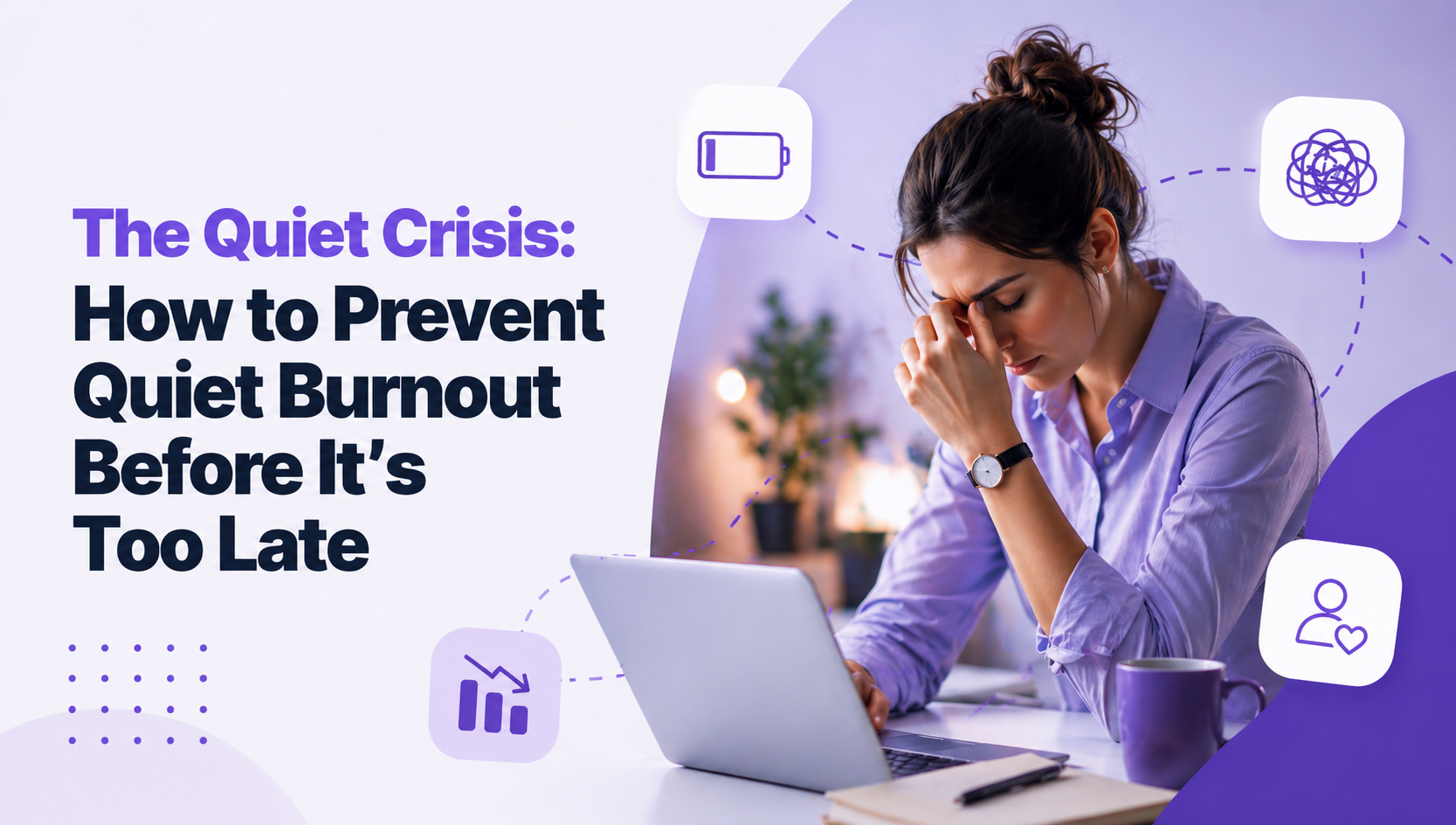
Your top performer hasn't missed a deadline in months. They reply to messages promptly, deliver their projects on time, and never complain. By all visible measures, they're doing great.
But six weeks from now, they'll hand in their resignation.
This is the hallmark of quiet burnout — one of the most dangerous workplace trends shaping 2026. Unlike classic burnout, which announces itself through missed deadlines and emotional outbursts, quiet burnout stays hidden. Employees appear engaged on the surface while quietly running on empty underneath. By the time a manager notices, the damage is already done.
The Numbers Don't Lie
This isn't a fringe phenomenon. Research from 2026 paints a stark picture:
- 83% of workers report experiencing at least some degree of burnout
- Employee engagement has dropped to just 64% — down from 88% the year prior
- Burnout is most acute among entry-level and associate employees, with over 60% reporting reduced engagement as a result
What makes this wave especially hard to combat is that quiet burnout disproportionately affects high performers — the people who have learned to push through discomfort, mask their struggles, and keep showing up even when they're running on fumes. They don't raise flags. They don't ask for help. And then one day, they leave.
The cost? Replacing a single mid-level employee can run between 50% and 200% of their annual salary when you factor in recruiting, onboarding, and the institutional knowledge that walks out the door with them.
Why Traditional Engagement Surveys Miss It
Most organizations still rely on annual or quarterly engagement surveys to take the pulse of their teams. The problem is obvious in retrospect: a person experiencing quiet burnout in February won't show up as a risk in a survey taken in January.
By the time the data is collected, analyzed, and acted upon, weeks or months have passed. The employee who checked "satisfied" in the last survey is already halfway through their job search.
Annual surveys are snapshots. But burnout is a process — it builds slowly, through hundreds of small signals that no quarterly report will ever capture.
The Shift to Predictive Culture Management
The most forward-thinking HR teams in 2026 have stopped asking "How engaged are our employees?" and started asking "What will our engagement look like in 90 days?"
This shift — from reactive measurement to predictive prevention — is being powered by AI. Modern engagement platforms can now track daily mood signals, communication patterns, workload fluctuations, and sentiment shifts to build a real-time picture of team health. Combined, these signals can predict burnout risk 2 to 3 months before an employee quits, giving managers the window they need to actually intervene.
Think about what that means in practice. Instead of being blindsided by a resignation, a manager gets a quiet alert: "This team member's sentiment scores have declined steadily over the past three weeks. Their response times have slowed. Their participation in team discussions has dropped. Consider checking in."
No guesswork. No gut feeling. Just clear, early signal — while there's still time to act.
What AI-Powered Burnout Prevention Looks Like in Practice
The best AI-driven engagement systems don't replace the human relationship between manager and employee — they make it possible. Managers are overwhelmed. They're managing larger teams, navigating hybrid work, and fielding more demands than ever. The expectation that they'll notice every subtle shift in each team member's wellbeing is simply unrealistic.
AI fills the gap by doing the continuous monitoring that humans can't — not by surveilling employees, but by aggregating anonymous signals into meaningful patterns. When a pattern suggests risk, the system surfaces it. The manager then does what managers do best: they have a real conversation.
The best implementations of this look like:
- Daily micro-check-ins (1–2 questions, 30 seconds) that build a longitudinal picture of team mood without survey fatigue
- Burnout risk scores updated dynamically, flagging individuals and teams that are trending in the wrong direction
- Coaching nudges for managers — specific, contextual suggestions based on the team's current state ("Your team has had three consecutive high-pressure weeks. Consider blocking off a no-meeting afternoon.")
- Anonymous team-level insights that let leadership see patterns across departments without compromising individual privacy
The Human Element Remains Central
It's worth saying plainly: AI doesn't fix burnout. People do.
What AI does is buy time and visibility. It catches the signal before the crisis, creates space for the conversation that might not have happened otherwise, and helps managers move from reactive to intentional.
The organizations that will come out ahead in the war for talent over the next few years won't be the ones with the best perks or the most generous salaries. They'll be the ones where employees feel genuinely seen — where their struggles don't have to become resignation letters before anyone notices.
That starts with listening more carefully. And in 2026, listening carefully means using every tool available — including AI — to hear what your people aren't saying out loud.
Is your team showing early signs of quiet burnout?
Kudosky's KAIA AI agent monitors team sentiment in real time, surfaces burnout risk before it becomes resignation risk, and gives managers the insights they need to lead with empathy and precision.
Start for free → — no credit card required, up to 10 users.
Sources: UC Today Employee Engagement Trends 2026; Hunt Scanlon Workforce Trends 2026; Spring Health Mental Health Trends 2026
Make the good work visible.
Recognition that fits the day your team already has: colleague to colleague, in Slack and Teams.